
Negotiate your salary with proven scripts, smart timing, and clear red flags. Build confident leverage, protect your value, and secure a stronger total package.
Salary negotiation in 2026 is still a guide, not a gamble. Yet the terrain is changing fast. Pay transparency laws are spreading. AI tools are everywhere. Remote and hybrid policies keep shifting. Consequently, the old advice, “Just ask for 10%,” feels weak and risky.
This guide gives you a practical, high-confidence system. You will learn how to set a powerful target, speak with calm authority, use scripts that feel natural, and spot dangerous red flags early. Moreover, you will see what is emerging now, and what is likely to matter through 2026.
Why negotiating in 2026 feels different
Pay transparency is rewriting leverage
In late 2025, many employers already post salary ranges in more places. Additionally, more jurisdictions require ranges in job ads, and many candidates now expect that clarity. That shift is emotionally relieving for many people. It also changes your strategy.
A posted range is not a “truth.” It is a boundary the employer chose. However, it gives you a visible anchor. That makes your counteroffer feel more legitimate when you can justify where you fit inside the band, or why you belong above it.
In the EU, the Pay Transparency Directive is pushing this trend further, with transposition deadlines that land in 2026. (Service Public Entreprendre)
AI is speeding up hiring and standardizing offers
Hiring teams increasingly rely on automated screening, structured interviews, and compensation bands enforced by software. Meanwhile, candidates are using AI to research pay, craft narratives, and practice scripts. Harvard’s Program on Negotiation even notes the rise of AI on both sides, including experiments where employees negotiate with a bot. (Pon Harvard)
That creates a new advantage. Preparation can be faster, sharper, and more evidence-based. Yet it also creates a new risk. If you sound generic, you become easy to dismiss.
Skills are the real currency
The job market is rewarding scarce skills and measurable impact. Furthermore, employers expect skill change to continue through 2030, with large upskilling needs. That reality makes your value story critical. (World Economic Forum)
The mindset shift that makes negotiation feel safer
Treat negotiation as alignment, not combat
Many people avoid negotiation because they fear conflict. That fear is normal. Still, the most effective negotiation is calm, collaborative, and precise. Investopedia’s guidance emphasizes thorough preparation and a partnership mindset rather than a rivalry. (Investopedia)
Instead of “I demand,” you are aiming for “Let’s align the package with the value I will deliver.” That tone is powerful. It is also professional.
Aim for clarity, not bravado
Confidence is not loud. It is clear. Your goal is to sound grounded, decisive, and easy to work with. Additionally, you want to make it simple for the employer to say yes without drama.
That means two things. First, you justify your number with market data and role impact. Second, you make trade-offs explicit, so the other side can choose options.
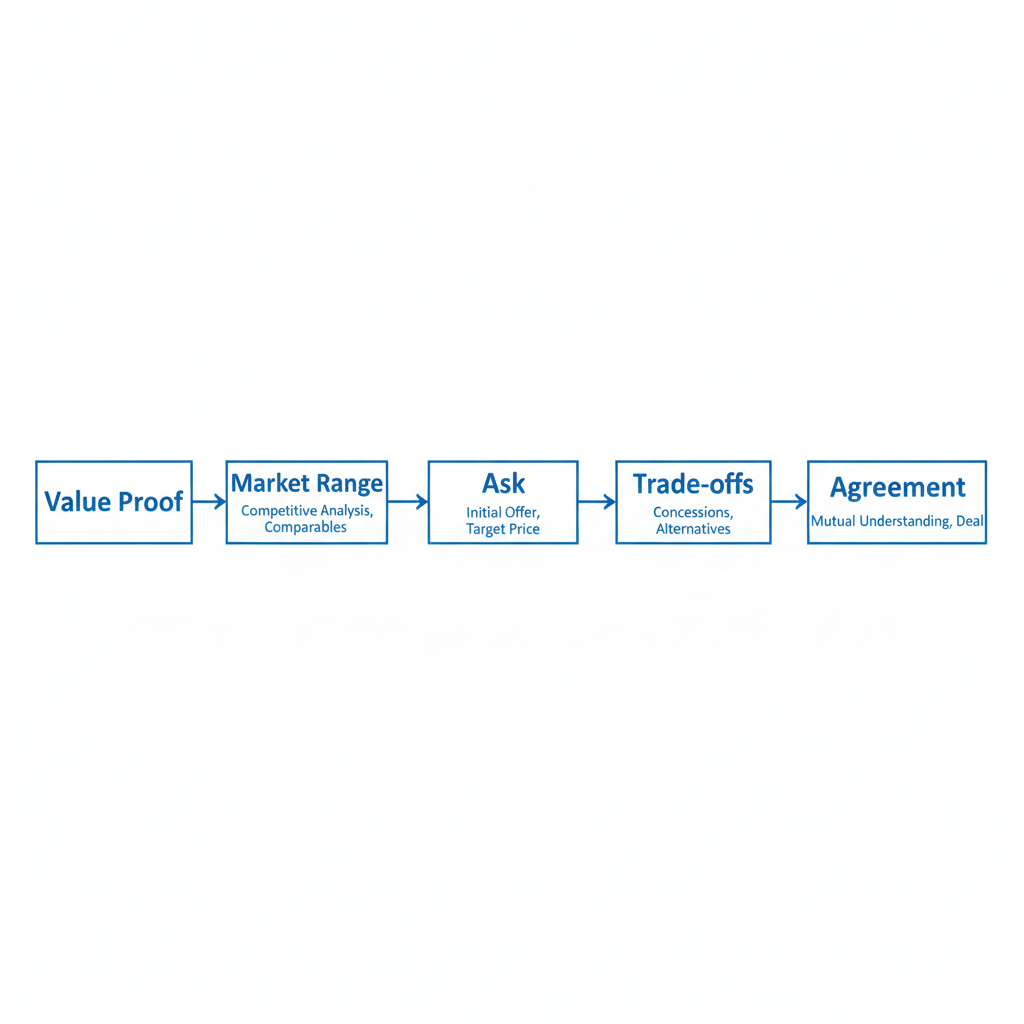
Step 1: Build a “credible range” before you speak
Use pay transparency as a starting point, not a finish line
If a job post includes a range, treat it as a map. Then decide where you belong and why. Your “credible range” should reflect role scope, seniority, and location. It should also reflect your unique edge, such as revenue impact, hard-to-hire skills, or rare domain expertise.
In places with strong pay transparency rules, salary bands are harder to hide. For example, Illinois guidance notes pay scale and benefits disclosure requirements for certain postings starting in 2025. (Illinois Department of Labor) That trend makes your research easier, and your justification stronger.
Think in total compensation, not base salary
Base salary is only one lever. However, total compensation can include bonus, equity, sign-on, retention bonus, relocation, learning budget, remote stipend, and title level. Additionally, flexibility can be a form of value.
When you calculate your target, decide:
Asks you care about deeply, asks you can trade, asks you will ignore.
Keep it simple. You are building a clean, powerful plan.
[YouTube Video]: Practical salary negotiation scripts you can reuse. This helps you hear confident phrasing that still sounds human.
Step 2: Build a value case that feels undeniable
Turn your work into a business story
Employers pay for outcomes. So your value case must be vivid and measurable. Instead of listing tasks, describe results.
Use a tight structure:
Problem, action, measurable outcome, repeatability.
For example, “I improved onboarding,” becomes, “I reduced onboarding time by 30%, which lowered churn and raised activation.”
This is emotionally convincing because it signals competence and control. Moreover, it helps the employer justify your higher number internally.
Match your value to what the company is trying to win
In 2026, many companies will still be obsessed with productivity, AI adoption, security, and cost discipline. Meanwhile, other companies will be chasing growth, expansion, and speed. Your job is to link your skills to their urgent priorities.
The World Economic Forum highlights fast-growing demand for skills like AI and big data, cybersecurity, and technology literacy, along with resilience and flexibility. (World Economic Forum) If your profile touches any of those, say it clearly. If it does not, you can still win by proving revenue impact, operational excellence, or risk reduction.
Step 3: Control timing like a professional
Delay the money talk until they want you
The highest-leverage moment is when they have decided you are the one. Until then, focus on fit, impact, and mutual excitement. Consequently, when salary questions arrive too early, your goal is to stay in the process while protecting your leverage.
A strong response sounds calm:
“I’m flexible if the overall scope fits. Could you share the range budgeted for this role?”
This is not evasive. It is strategic.
Never accept a fast deadline without requesting space
Exploding offers are common, especially in competitive hiring. However, healthy employers respect thoughtful decisions. If they pressure you hard, it can be a red flag.
Ask for time in a composed way:
“I’m excited. I want to review the full package carefully. Can I get 48 hours?”
Deepak Malhotra’s job-offer guidance is famous for emphasizing process control, preparation, and thoughtful negotiation rather than rushed reactions. (Harvard Business Review)
Step 4: The scripts that work in real life
Script: When they ask “What are your salary expectations?”
Try this:
“I’m most focused on the role fit and the impact I can deliver. Based on my research, roles like this tend to fall around X to Y for the scope we discussed. If we’re in that zone, I’m confident we can make it work.”
That answer is confident and clean. Moreover, it signals you did your homework.
If you truly have no number yet:
“I’d like to understand level and responsibilities a bit more. What range have you budgeted for this position?”
Script: When you receive the offer and want more
Start with warmth:
“Thank you. I’m genuinely excited about the team and the mission.”
Then pivot to clarity:
“I reviewed the offer carefully. Based on market benchmarks and the impact we discussed, I was targeting X. Is there room to adjust the base to X, or to improve the package through a sign-on bonus or equity?”
This works because it is respectful, specific, and flexible.
Script: When they say “We don’t negotiate”
Stay steady:
“I understand the process. At the same time, compensation alignment is important for long-term success. What flexibility do you have inside the band, and what would be required to reach the top of that range?”
If they still block:
“Could we explore a review at 6 months with clear performance targets and a pre-agreed adjustment?”
That keeps your dignity and creates a path.
Step 5: Handle pushback without losing momentum
“We have budget limits”
Budget limits are real. However, “budget” can mean many things. It can mean base salary is capped. It can also mean the hiring manager needs approval. Therefore, ask smart questions instead of arguing.
Try:
“What part of the package is most flexible right now?”
Then propose trades:
If base is tight, push sign-on, equity, or a faster review cycle.
Harvard’s Program on Negotiation stresses that any counteroffer needs justification and a story, not just a number. (Pon Harvard)
“This is the standard offer for your level”
That statement is meant to end the conversation. Yet it can be an opening. You can respond with calm curiosity:
“Helpful context. What would it take to be leveled one tier higher, given my experience?”
If leveling is impossible, ask for a performance-linked plan:
“Could we define milestones now, and align a comp adjustment to those outcomes?”
This feels fair and future-focused. It also sounds mature.
[YouTube Video]: A modern take on using AI tools to prepare and practice negotiation. Useful if you want faster research and sharper wording.
Step 6: Red flags that should make you slow down
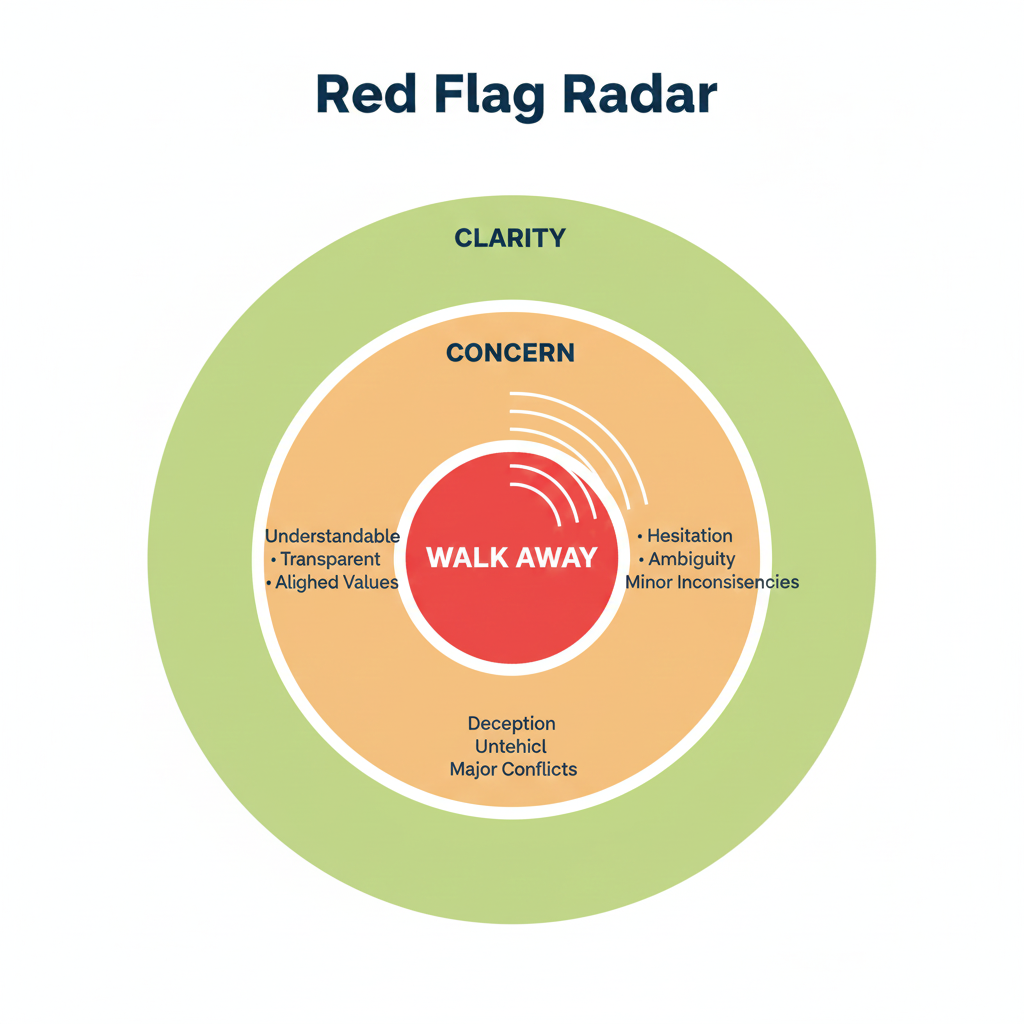
Red flag: The range is vague, absurdly wide, or keeps changing
A “0 to 200k” style range is not transparency. It is a smokescreen. Additionally, a shifting range can signal internal confusion or low trust.
In places with strong pay transparency rules, guidance often expects “good faith” ranges. For example, New York State explains range expectations for postings under its pay transparency framework. (Department of Labor)
If you see a range that feels suspicious, ask:
“What level is this offer pegged to, and where does it sit inside the band?”
Red flag: They push you to accept before you can review
Pressure can happen for innocent reasons. Still, intense urgency can be a warning. Consequently, insist on written details. Ask for the offer letter, benefits summary, and equity terms.
If they refuse to put details in writing, treat that as a serious risk.
Step 7: What’s emerging through 2026
Pay transparency will keep expanding
In Europe, the pay transparency directive is driving major changes, with national implementation deadlines in 2026. (Service Public Entreprendre) In the US, more states have adopted pay disclosure rules in postings and internal moves, and updates continue. For example, Massachusetts explains its pay transparency requirements taking effect in late 2025. (Massachusetts Government)
The practical implication is powerful. More ranges become visible. More employees compare notes. More companies tighten bands. Therefore, negotiation becomes less about “mystery numbers” and more about role level, evidence, and positioning inside a band.
AI will shape how compensation is offered
Harvard’s negotiation research notes both sides using AI, including cases where a company used a bot to negotiate compensation packages. (Pon Harvard) This trend can make offers feel more standardized. Meanwhile, it can reduce certain interpersonal biases in negotiation style.
For you, the move is clear:
Use AI to practice, not to replace judgment.
Use multiple sources for salary data.
Keep your message personal, precise, and credible.
Step 8: A simple, high-impact preparation routine
The 48-hour plan before the call
First, write your credible range and your target number. Next, write your value story in three sentences. Then practice your scripts out loud until they feel natural.
Additionally, rehearse your tone. Calm beats aggressive. Warm beats anxious. Clear beats clever.
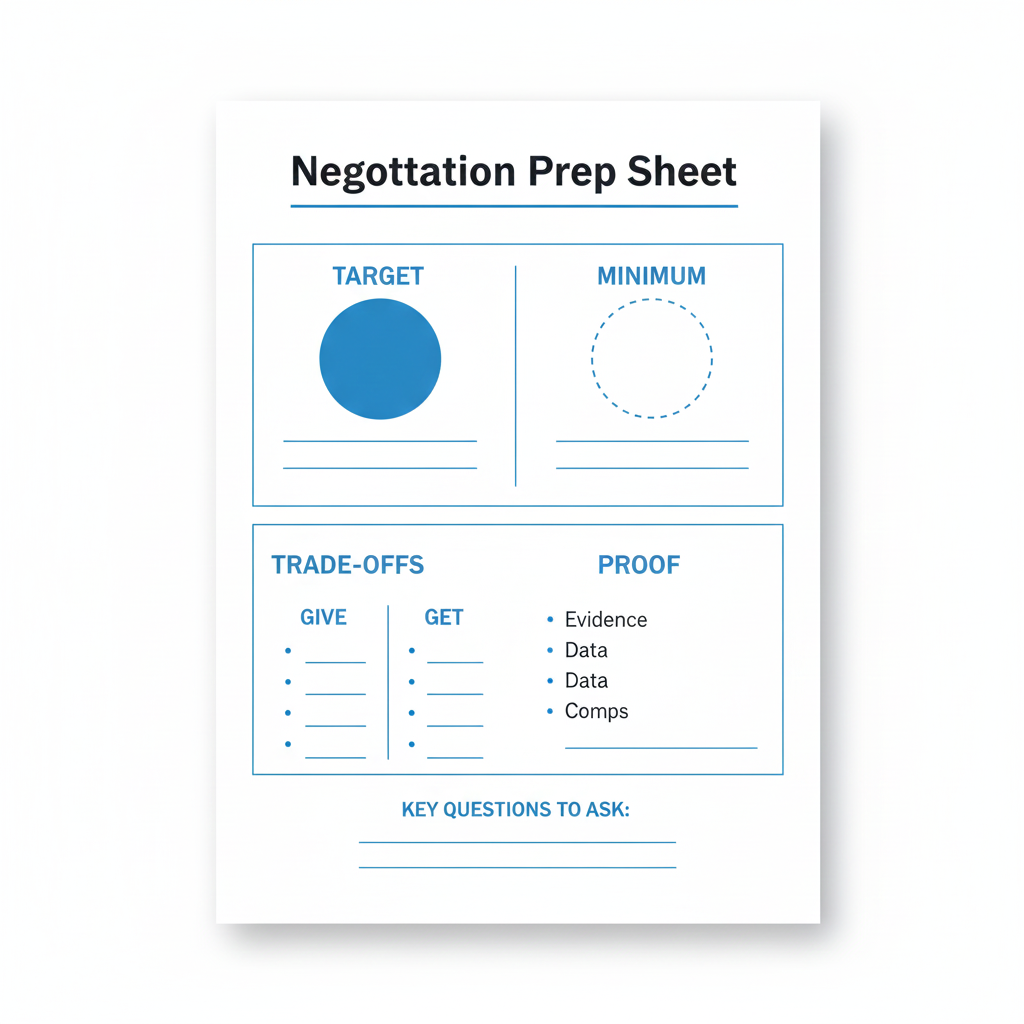
The “one page” you should have in front of you
Create a single page with:
Your target, your minimum, your best trade-offs, and your proof points.
Keep it close during the call. It gives you steady confidence. It also reduces emotional drift when pressure hits.
Conclusion: Your 2026 negotiation should feel powerful, not scary
A strong negotiation is not a performance. It is a structured conversation. You bring evidence, clarity, and calm. They bring constraints and options. Together, you shape a fair deal.
If you do one thing today, make it this:
Build your credible range, write your value story, and practice one script until it sounds like you.
That small routine can create a rewarding, confidence-building outcome that lifts your income for years.
Sources and References
- 15 Rules for Negotiating a Job Offer (HBR)
- How to Counter a Job Offer: Avoid Common Mistakes (PON)
- How to Negotiate a Pay Raise or Starting Salary Using AI (PON)
- Your Right to Discuss Wages (NLRB)
- Directive (EU) 2023/970 on Pay Transparency (EUR-Lex)
- Wage transparency: what will change (Service-Public Entreprendre)
- 7 Mistakes to Avoid When Negotiating Your Next Job Offer (Investopedia)
- The Future of Jobs Report 2025: Digest (World Economic Forum)
- Equal Pay Act Salary Transparency (Illinois Department of Labor)
- Pay Transparency in Massachusetts (Mass.gov)