
Stop overspending and start thriving. Discover 10 simple, proven ways to save money every month. Secure your financial future with these essential tips today.
Dec 12, 2025. The economic landscape has shifted. Prices are higher. Inflation remains a stubborn challenge for families worldwide. However, you are not powerless. You have the ability to take control. Saving money is not just about pinching pennies. It is about reclaiming your freedom. It is about building a secure fortress around your financial life.
Many people feel overwhelmed by their finances. They feel trapped by rising costs. This is a common struggle. Yet, there is a way out. By implementing a few strategic changes, you can transform your bank account. You can move from surviving to thriving. This comprehensive guide provides actionable, verified methods to keep more cash in your pocket.
We will explore ten powerful strategies. These are not theoretical concepts. They are practical, real-world tactics. We cover everything from insurance optimization to psychological hacks. You will learn how to cut costs without sacrificing your quality of life. This is your essential roadmap to financial success.
1. Master the Art of Subscription Audits
We live in a subscription economy. Companies love the recurring revenue model. It is profitable for them. However, it can be devastating for your budget. You likely have subscriptions you have forgotten about. These “vampire costs” silently drain your funds every month.
The Hidden Cost of Convenience
Streaming services are the most obvious culprits. You might have Netflix, Hulu, Disney+, and HBO. Do you watch all of them? Probably not. Additionally, consider gym memberships, software licenses, and subscription boxes. These small charges add up quickly. A $15 monthly charge equals $180 a year. Five of those equal $900. That is a significant amount of money.
The Audit Process
First, print out your last three months of bank statements. Go through them line by line. Highlight every recurring charge. You might be shocked at what you find. Identify services you have not used in the last 30 days.
Next, be ruthless. Cancel anything that does not bring you immediate value. You can always resubscribe later if you miss it. Most likely, you will not. This simple act produces immediate, guaranteed savings.
Negotiation is Key
For the services you keep, negotiate. Call your internet provider. Call your mobile carrier. Tell them you are thinking of switching. Ask for a loyalty discount. Customer retention departments have the power to lower your bill. You just have to ask. It is an uncomfortable conversation for some. However, it is highly rewarding.
2. Revolutionize Your Grocery Shopping
Food is a major expense. It is also one of the most variable categories in a budget. You cannot avoid eating. Nevertheless, you can control how much you pay for it. The modern grocery store is designed to make you spend. You need a strategy to fight back.
The Power of Meal Planning
Meal planning is vital. It is the enemy of impulse buying. When you go to the store without a plan, you lose. You buy things you do not need. You buy items that go to waste.
Sit down once a week. Plan every dinner. Make a precise shopping list based on that plan. Stick to the list religiously. If it is not on the list, do not buy it. This discipline is critical. It eliminates food waste. It ensures you only pay for what you eat.

Curbside Pickup as a Tool
Consider using curbside pickup. Many stores offer this for free or a low fee. This prevents you from entering the store. You avoid the temptation of end-cap displays. You avoid the smell of the bakery. You see the total cost in your digital cart before you check out. If you are over budget, you delete an item. This puts you in complete control.
Furthermore, look at unit prices. Do not just look at the sticker price. Look at the price per ounce or per pound. Often, the larger package is cheaper. Sometimes, surprisingly, it is not. The math does not lie. Be vigilant.
3. Optimizing Insurance Policies
Insurance is a necessary evil. It protects us from catastrophe. However, many people overpay significantly. They set it and forget it. This is a costly mistake. Insurance companies often creep up rates year over year. You must be proactive to secure the best deal.
The Annual Review
You should shop for car and home insurance every year. Loyalty rarely pays in the insurance industry. New customers often get better rates. Use comparison websites to check the market. If you find a better rate, call your current insurer. Ask them to match it. If they refuse, switch. It is that simple.
Deductible Adjustments
Consider raising your deductible. If you have a $500 deductible, raise it to $1,000. This will lower your monthly premium immediately. You take on slightly more risk. However, if you are a safe driver, the math works in your favor. Take the savings and put them in a dedicated emergency fund. This way, you self-insure the difference.
Bundling for Success
Ensure you are bundling your policies. Combine auto and home. Combine renters and auto. Most companies offer significant discounts for this. It simplifies your billing. It also locks in cheaper rates. Verify that you are getting every discount possible. Ask about safe driver discounts. Ask about good student discounts. Leave no stone unturned.
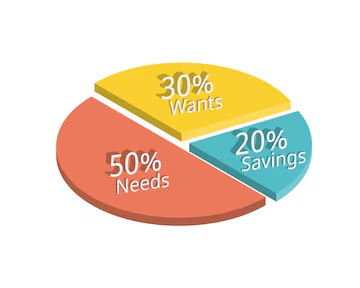
4. Embrace the 50/30/20 Rule
Budgeting can feel restrictive. It feels like a diet for your money. However, the 50/30/20 rule is different. It is a framework for freedom. It simplifies the complex world of personal finance. It gives you permission to spend, provided you save first.
Understanding the Split
The rule is straightforward. 50% of your income goes to needs. These are housing, utilities, and basic groceries. 30% goes to wants. This is dining out, hobbies, and entertainment. 20% goes to savings and debt repayment.
This structure is powerful. It ensures you are saving a substantial amount. It guarantees you are covering your bills. Yet, it leaves room for fun. You do not have to live a miserable life to save money. You just need balance.
Tracking is Essential
You cannot manage what you do not measure. Use a budgeting app or a simple spreadsheet. Track every dollar. Categorize your spending into the three buckets. At the end of the month, review your performance. Did you overspend on wants? Did you hit your 20% savings target?
Adjust as necessary. If your needs exceed 50%, you have a structural problem. You may need cheaper housing. You may need to increase your income. The data reveals the truth. It empowers you to make difficult but necessary decisions.
5. Automate Your Financial Success
Willpower is a finite resource. You get tired. You get stressed. You make bad decisions when you are emotional. Therefore, you should remove willpower from the equation. Automation is the secret weapon of the wealthy.
Pay Yourself First
Set up an automatic transfer on payday. Move money from your checking account to your savings account immediately. Do this before you pay any bills. Do this before you buy any groceries.
If the money is not in your checking account, you cannot spend it. You learn to live on what remains. This is called “paying yourself first.” It prioritizes your future over your present desires. It transforms saving from a choice into a habit.
Bill Pay Automation
Automate your fixed bills as well. Set up autopay for your mortgage, electricity, and internet. This prevents late fees. It protects your credit score. A high credit score saves you money on interest rates later. Consequently, automation creates a virtuous cycle of financial health. It reduces stress. It frees up your mental bandwidth for more important things.
6. Slash Energy Consumption
Your home consumes energy every second. You pay for every kilowatt. Reducing this consumption is good for the planet. It is even better for your wallet. Small changes lead to massive results over time.
The Thermostat Strategy
Heating and cooling are huge expenses. Adjust your thermostat. In the winter, lower it by a few degrees. Wear a sweater. In the summer, raise it. Use fans to circulate air.
Invest in a smart thermostat. These devices are revolutionary. They learn your schedule. They adjust the temperature when you are away. They stop you from heating an empty house. The initial investment is paid back quickly through lower utility bills.
Vampire Electronics
Electronics use power even when they are off. This is called “phantom load.” Your TV, computer, and coffee maker are guilty. Unplug devices when not in use. Use power strips with on/off switches. Turn off the entire strip at night.
Switch to LED bulbs. They use a fraction of the energy of old bulbs. They last for years. This is a low-cost upgrade with a high return on investment. It is a simple, physical way to cut costs.
7. Intelligent Transportation Choices
Cars are expensive. They depreciate rapidly. They require fuel, insurance, and maintenance. Reducing your transportation costs is a proven way to free up cash.
Drive Less
Combine your errands. Do not go out five times. Go out once. Plan your route to be efficient. This saves gas. It saves time.
If possible, carpool. Share the cost of fuel with a coworker. Use public transportation if it is available. Even doing this one or two days a week helps. It reduces wear and tear on your vehicle. It extends the life of your car.
Maintenance Matters
Maintain your car. Change the oil on time. Keep your tires inflated properly. Under-inflated tires lower your gas mileage. Poor maintenance leads to catastrophic repairs. A $50 oil change is cheaper than a $5,000 engine replacement. Preventive care is a financial strategy. It protects your asset.
8. The Generic Brand Advantage
Marketing is powerful. It convinces us that brand names are superior. We believe the fancy logo means better quality. often, this is a lie. Generic or store brands are frequently identical to the name brands.
The Ingredient Truth
Read the labels. Look at the ingredients on a box of name-brand medicine. Look at the generic version. They are often exactly the same. The dosage is the same. The active ingredient is the same. The only difference is the price and the packaging.
This applies to food as well. Pasta, rice, canned beans, and spices. The store brand is significantly cheaper. Switching to generics can lower your grocery bill by 20% or more. This is easy money. It requires no sacrifice in taste or quality. It only requires you to ignore the marketing hype.
Warehouse Club Memberships
Consider buying in bulk for non-perishables. Paper towels, toilet paper, and cleaning supplies. Warehouse clubs offer lower unit prices. However, be careful. Do not buy bulk perishable items unless you are sure you will use them. Rotting food is wasted money. Be strategic.
9. DIY Repairs and Skills
We have become a disposable society. When something breaks, we throw it away. When a shirt loses a button, we donate it. We pay people to do simple tasks. This is expensive. Reclaiming these skills is empowering.
The YouTube University
You can learn to fix almost anything online. Is your toilet running? Watch a tutorial. Is your dryer making a noise? There is a video for that. You can fix minor plumbing issues. You can do basic carpentry.
You do not need to be a professional. You just need patience and the willingness to learn. Fixing a running toilet costs $5 for a part. Calling a plumber costs $150. That is a massive saving.
Clothing Maintenance
Learn to sew a button. Learn to hem a pant leg. These are basic skills. They extend the life of your wardrobe. You do not need to buy new clothes constantly. Care for what you own. It is sustainable. It is frugal. It is smart.
10. High-Yield Savings Accounts
Where you keep your money matters. Traditional banks pay almost zero interest. They use your money to make money. They give you nothing in return. This is unacceptable.
Make Your Money Work
Open a High-Yield Savings Account (HYSA). Online banks offer these. They have lower overheads. They pass the savings to you. In 2025, interest rates are competitive. A HYSA can pay 10 to 20 times more interest than a standard account.
This is passive income. It is free money. You do not have to work for it. Your money works for you. It helps your emergency fund grow. It fights the eroding effects of inflation.
Safety and Accessibility
Ensure the bank is insured. Look for FDIC insurance in the US. This guarantees your money is safe up to the limit. Online banks are secure. They are convenient. Moving your savings there is a critical step in your financial journey.
Overcoming Psychological Barriers to Saving
Saving money is 20% head knowledge and 80% behavior. The math is simple. The psychology is hard. We are wired to seek instant gratification. We want the reward now. Saving requires delaying that reward.
The “Why” Factor
You must define your “why.” Why do you want to save? Is it for a house? Is it for retirement? Is it to escape a toxic job? A vague goal like “saving money” is weak. A specific goal like “buying a home in 2 years” is powerful.
Visualize your goal. Write it down. Put a picture of it on your fridge. When you are tempted to spend, look at the picture. Remind yourself of what you really want. This emotional connection keeps you on track.
The 24-Hour Rule
Implement the 24-hour rule for non-essential purchases. If you see something you want, wait 24 hours. Do not buy it immediately. Walk away.
Usually, the urge to buy fades. You realize you do not need it. The dopamine rush subsides. Rationality returns. This simple pause prevents impulse spending. It saves you thousands of dollars a year.
Conclusion
Saving money is a journey. It is not a sprint. It requires consistency. It requires discipline. However, the rewards are immense. Imagine a life without financial stress. Imagine having a safety net. Imagine having the freedom to make choices based on your values, not your bank balance.
Start with one tip. Master it. Then add another. Audit your subscriptions today. Cook a meal at home tonight. Check your insurance rates this weekend. These small steps compound. They create momentum.
You have the power to change your financial destiny. The strategies in this guide are your tools. Use them. Be intentional. Be persistent. Your future self will thank you for the decisions you make today. Take that first step now.
Sources and References
- Investopedia: The 50/30/20 Rule of Budgeting
- Consumer Reports: How to Save on Car Insurance
- NerdWallet: High-Yield Savings Accounts Guide
- Energy.gov: Energy Saver Guide
- The Balance: How to Stop Living Paycheck to Paycheck
- Ramsey Solutions: 7 Ways to Lower Your Car Insurance
- Bankrate: Tips for Negotiating Medical Bills
- CNBC: How to Save Money on Groceries